- Authors

- Name
- 오늘의 바이브
Giving It Away to 20,000 Students

February 2026. Anthropic struck a partnership with CodePath. CodePath is the largest nonprofit computer science education organization in the US. The core of the deal is simple. Over 20,000 students get free access to Claude and Claude Code.
The target demographic is community colleges, state schools, and HBCUs (Historically Black Colleges and Universities). Over 40% of CodePath students come from households earning less than $50,000 a year. These are the people the tech industry has been leaving behind.
Anthropic's official statement reads: "The tools that are transforming how software is built should not be accessible only to students at well-resourced universities." Noble words. But when corporations talk like this, you should always look at what's behind the curtain.
Is giving it away to 20,000 students an act of goodwill, or a calculated move?
What Is CodePath
You need to understand CodePath first. Once you see why this organization matters, Anthropic's play becomes clear.
CodePath was founded in 2017 as a nonprofit. Its mission is straightforward: expand diversity in the tech industry. Specifically, it provides coding education to low-income students, underrepresented minorities, and first-generation college students.
This is not your typical university CS curriculum. CodePath is hands-on from day one. Students contribute to real open-source projects starting in their first semester. They write actual code for projects like GitLab, Puter, and Dokploy. Over 100 students did exactly this in the fall 2025 semester.
The numbers reveal the reach. CodePath currently partners with over 140 universities. Tens of thousands of students pass through the program each year. Graduates land jobs at Google, Meta, Amazon, and other major companies.
What matters even more is the network effect. CodePath alumni stay connected. They maintain their community after getting hired. An informal alumni network of junior developers forms organically.
This is why Anthropic picked CodePath. 20,000 students is not just 20,000 students. It is 20,000 potential influencers who will enter the tech industry.
Why HBCUs

The partnership specifically highlights HBCUs. HBCU stands for Historically Black Colleges and Universities. There are about 100 of them in the US. Howard University, Morehouse College, and Spelman College are among the most well-known.
The tech industry's diversity problem is decades old. As of 2024, Black engineers make up less than 5% of the engineering workforce at Silicon Valley's biggest companies. Compare that to Black Americans representing 13% of the total US population. The imbalance is severe.
HBCUs have the potential to close this gap. HBCU graduates produce a significant share of Black engineers in America. But they are starved for resources. Compared to Ivy League schools or major research universities, their CS programs receive far less investment.
The Anthropic-CodePath partnership takes direct aim at this problem. Howard University redesigned its "Introduction to AI" course in collaboration with CodePath. It is the first integrated curriculum to earn academic credit. Claude and Claude Code become the core tools of the course.
This is where Anthropic's calculation shows. What happens when HBCU students learn to code with Claude? When they get hired, they are naturally more likely to keep using Claude. Loyalty to your first tool is stronger than people think.
A developer who learned vi first uses vi for life. A developer who learned Emacs first uses Emacs for life. A developer who learned Claude first?
A History of Targeting Education
This is not Anthropic's first foray into education. Look at the past six months and a pattern emerges.
American Federation of Teachers (AFT) partnership. Free AI education for 1.8 million teachers. When teachers understand AI, they teach it to students. Indirect, but the reach is massive.
Iceland national AI education pilot. A project to integrate Claude into Iceland's entire education system. It is a small country, but the symbolism of a nationwide rollout is enormous.
Rwanda AI learning companion project. Exploring the possibilities of AI education in developing nations. Also a test for expansion into non-English-speaking markets.
Combine these three with the CodePath partnership and the strategy snaps into focus. Anthropic is targeting the entire education ecosystem. Teachers, students, low-income communities, developing countries. Every possible channel to make Claude the first AI people ever use.
This is not a new playbook. Microsoft did it in the 1990s.
The Microsoft Playbook
In the 1990s, Microsoft essentially gave Windows away to schools. Educational licenses cost one-tenth of regular licenses. Sometimes it was completely free.
Short-term, it was a loss. They could not make money from schools. But long-term, it was the greatest investment they ever made.
Students who learned Windows at school wanted Windows at work after graduation. Companies adopted the OS their employees were familiar with. This was one of the key reasons Windows dominated the enterprise market.
Apple ran the same play. In the 2010s, they flooded schools with iPads. Students who grew up in the Apple ecosystem kept buying Apple products as adults. iPhone, MacBook, Apple Watch. Lifetime customers.
Google was even more blatant. Chromebooks were practically free for schools. Google Workspace for Education was entirely free. Chromebook market share in US K-12 education exceeds 60%.
All of these cases share a common thread. They leverage the power of first experience. People struggle to abandon the first tool they learn. The switching cost is high. Learning a new tool takes time and energy. If the current tool is "good enough," there is no reason to switch.
Anthropic is applying this playbook to the AI era. If 20,000 students learn to code with Claude, there is a strong chance they will still be Claude users a decade from now.
What Are the Competitors Doing
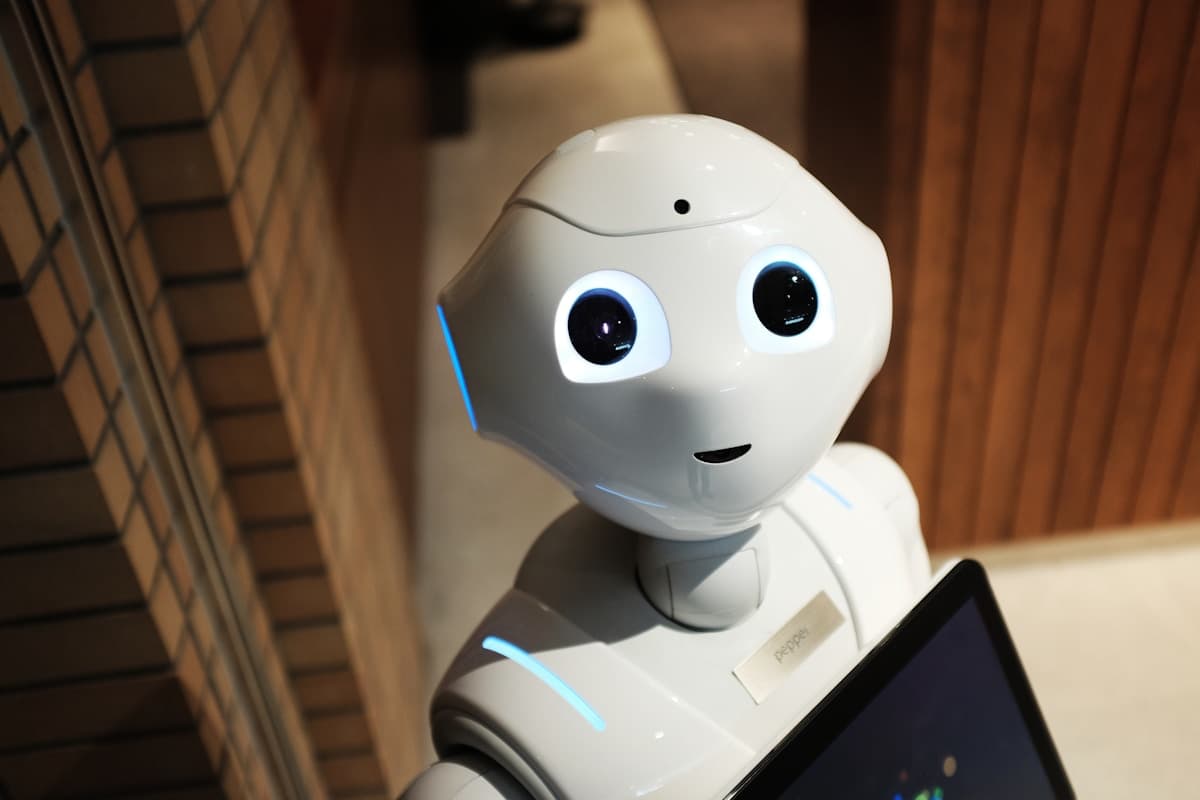
Anthropic is not the only one eyeing the education market. OpenAI and Google are making moves too.
OpenAI. They announced "ChatGPT for Education" in late 2025. Discounted ChatGPT Plus for universities and K-12 schools. But they have not built the kind of deep partnership Anthropic has with a specific nonprofit. It is a broad, shallow approach.
Google. Google for Education is already a massive platform. They have started integrating Gemini into it. Google Classroom now features Gemini-powered learning assistance. But the focus is on general learning, not coding education.
Microsoft. GitHub Copilot is free for students. It is included in the GitHub Student Developer Pack. They lead the coding tool market. But Copilot's backend runs on OpenAI models. It is hard to call this an independent Microsoft AI strategy.
Here is the comparison:
| Company | Education Program | Target Audience | Distinguishing Feature |
|---|---|---|---|
| Anthropic | CodePath Partnership | Low-income students | Deep integration, curriculum redesign |
| OpenAI | ChatGPT for Education | Universities, K-12 | Broad coverage, shallow integration |
| Gemini in Classroom | K-12 focused | General learning assistance | |
| Microsoft | Copilot in Student Pack | University devs | Coding-specific, dependent on OpenAI |
Anthropic's differentiator is clear. Depth. They are not just handing out tools. They are reshaping curricula. Howard University's "Introduction to AI" course was redesigned around Claude. Claude is the core tool of the class.
The advantage of this approach is that it dramatically raises switching costs. When a curriculum is built around Claude, moving to another tool is painful. Professors have to rewrite all their materials. Student assignment formats change. It is a hassle.
The end result: Claude becomes the standard at that school.
Open-Source Contribution as Training
There is another distinctive feature of the CodePath-Anthropic partnership. Students are pushed to contribute to real open-source projects.
In the fall 2025 semester, over 100 students contributed actual code to projects like GitLab, Puter, and Dokploy. They were not practicing in a classroom. They were deployed into the real thing.
Why does this matter?
First, the learning effect is different. Textbook example code and real production code are completely different things. In real projects, you read legacy code, collaborate with other developers, and get your code reviewed. This kind of experience dramatically shortens the adjustment period after getting hired.
Second, it builds a portfolio. The biggest hurdle for new developers in the job market is "no experience." Open-source contribution history lowers that hurdle. When you have real project contributions on your GitHub, it changes how interviewers see you.
Third, Claude Code becomes the core tool. Students use Claude Code to make their open-source contributions. They experience Claude as an "AI pair programmer." That experience sticks.
This is where Anthropic's intent becomes transparent. The goal is not just to make students "aware" of Claude. It is to create success experiences with Claude.
In psychology, this is called a "positive feedback loop." Code with Claude, contribute to open source, get praised, get your PR merged, develop positive feelings toward Claude, use Claude more.
Once this loop is established, switching to a competitor becomes psychologically difficult. It is not a simple feature comparison anymore. Emotions are involved.
Anthropic's Ambition in Numbers
Anthropic has not disclosed exactly how much it invests in education. But we can estimate.
CodePath partnership cost. Assume 20,000 students get Claude Pro (monthly 20 x 12 = $4.8 million. Of course, educational discounts likely bring the real number lower.
AFT partnership cost. If 10% of the 1.8 million teachers are active users, that is 180,000 people. 180,000 x 43.2 million**. Again, with discounts factored in, it is probably in the tens of millions.
Iceland and Rwanda projects. Smaller in scale, so relatively cheaper. Combined estimate: a few million dollars.
Total education investment is estimated at 100 million per year.
Is that a lot, or a little?
Anthropic's recent valuation exceeds 5 billion. Education investment represents roughly 1-2% of revenue.
Now consider the return. Suppose half of the 20,000 CodePath students land tech jobs. That is 10,000. If each of them recommends Claude to 5 teammates, that is 50,000 people influenced.
50,000 people using Claude Pro for a year generates 50,000 x 12 million** in revenue. That is 2.5x the initial $4.8 million investment.
This is obviously an oversimplified calculation. Conversion rates, churn, competition -- there are many variables. But when you factor in long-term revenue, education investment is a perfectly rational business decision.
The Howard University Experiment

Let us look at a concrete case. Howard University.
Howard is the most famous among all HBCUs. It is the alma mater of Vice President Kamala Harris, Charles Drew, and Toni Morrison. Its academic reputation is formidable.
Starting in the spring 2026 semester, Howard's "Introduction to AI" course is being redesigned. CodePath and Anthropic co-developed the curriculum. Here are the key features:
Academic credit. This is the first CodePath-affiliated university to offer full academic credit. It is a 3-credit regular course. It appears on students' official transcripts.
Claude-centric hands-on work. Over 60% of class time involves hands-on work with Claude and Claude Code. Theory lectures are minimized.
Project-based assessment. No exams. Students are evaluated through projects. They submit work that uses AI to solve real-world problems.
Mandatory open-source contribution. At least one open-source contribution is required by the end of the semester. Even if the PR does not get merged, submitting one counts.
If this curriculum succeeds, it becomes a template. Other HBCUs and CodePath partner schools can adopt the same curriculum. Howard is the pilot. If it is validated, it scales.
Howard's adoption carries symbolic weight. The school that represents HBCUs chose Claude. That has a signaling effect. Other HBCUs are likely to follow, reasoning "if Howard is doing it, so should we."
The Criticism
It is not all rosy. There are legitimate criticisms.
First, vendor lock-in. If students become dependent on a specific AI tool, that is risky. There is no guarantee Claude is the best tool. GPT-6 might be overwhelmingly better in two years. But students who grew up on Claude may find it hard to switch.
The purpose of education is to develop versatile thinking skills. Not to teach people how to use a specific product. A Claude-centric curriculum could undermine this principle.
Second, digital colonialism. Introducing an American company's AI into countries like Iceland and Rwanda is contentious. It could stifle the development of local AI ecosystems. It could deepen dependence on American technology.
Rwanda is especially sensitive. Giving "free" technology to developing nations has historically not always produced good outcomes.
Third, reproducing educational inequality. Yes, CodePath helps low-income students. But in the process, a specific corporation's influence grows. There is a risk of education becoming a marketing channel for a company.
Public education is supposed to be neutral. An Anthropic-sponsored curriculum could conflict with that principle.
Fourth, AI dependency. If students learn to code with AI from the very beginning, can they code without it? If they never implement basic algorithms and data structures by hand and only use AI output, does real skill actually develop?
This is a heated debate in education circles. The same argument was made when calculators appeared. It has not been settled yet.
Anthropic's Real End Game
Despite the criticism, Anthropic's strategy is rational. They are playing a long game.
The AI market is still in its early stages. No winner has been decided. OpenAI is ahead, but the technology gap is closing fast. Claude 4.5 matches or beats GPT-4o.
In this situation, something matters more than market share. Mind share. If "AI = Claude" gets imprinted in people's heads, they are more likely to pick Claude when the technology becomes comparable.
Brand loyalty does not come from feature comparisons. It comes from experience. Your first success, your first moment of awe -- that is what imprints a brand.
Anthropic wants to give 20,000 students this experience. If their first coding experience is with Claude, there is a strong chance they stay Claude-friendly for life.
Think 10 years ahead. A college freshman in 2026 becomes a junior developer in 2030. A senior developer in 2035. A team lead in 2040. The person who decides which AI tool the team uses.
When that person says, "I've been using Claude since college and it's been great" -- the entire team switches to Claude.
That is Anthropic's real end game. The student of 2026 becomes the decision-maker of 2040.
The Opening Shot of the AI Education War
The Anthropic-CodePath partnership is not an isolated event. It is the opening shot of the AI education war.
Over the next five years, OpenAI, Google, Microsoft, and Anthropic will all invest more aggressively in education. The race to capture students' first AI experience will intensify.
Some moves are predictable.
OpenAI. They will expand ChatGPT into K-12. The current focus is universities, but they are likely to push down into high schools and middle schools. Getting young people on ChatGPT early to build loyalty.
Google. They will strengthen the Chromebook + Gemini bundle. Chromebooks are already in schools. Just ship Gemini pre-installed. Leveraging infrastructure advantage.
Microsoft. They will expand GitHub Copilot further into education. It is currently university-focused, but expect them to push into coding bootcamps and online courses. Integration with LinkedIn Learning is also likely.
Chinese companies. DeepSeek, Baidu, and Alibaba will enter the education market. The domestic Chinese market is obvious, but they will also target Southeast Asia, Africa, and other emerging markets. Price will be their weapon.
The education market will likely end up as a "regional partition" rather than "winner-take-all." Anthropic and OpenAI compete in the US, GDPR-friendly solutions have the edge in Europe, and local players dominate in Asia.
Conclusion: Between Goodwill and Strategy
Is Anthropic giving Claude to 20,000 students out of goodwill, or as a strategy?
The answer is both.
Providing cutting-edge AI tools to low-income students is genuinely a good thing. It reduces the education gap. It expands opportunity. HBCU students get access to the same tools as Ivy League students. That is an undeniable positive.
At the same time, it is a meticulously calculated business strategy. It secures future customers early. It builds brand loyalty. It seizes the education market before competitors do. If you think Anthropic's board made this decision purely out of goodwill, you are being naive.
But the two are not mutually exclusive. Doing good while making money is possible. Call it sustainable goodwill. Pure charity does not last. You need a business model for scale, and scale is what drives impact.
If Anthropic's education investment succeeds, other companies will follow. As competition heats up, the benefits flowing to students increase. AI education access improves across the board.
20,000 students learn Claude. Anthropic secures future customers. Diversity in tech improves. It looks like everyone wins.
Of course, we will need to wait 10 years to see the real outcome. What tools will the students of 2026 be using in 2036? Only then can we judge whether Anthropic's "real motive" paid off.
What is certain now is this. Education is the longest investment there is. And Anthropic has started that game.
Sources: