- Authors

- Name
- 오늘의 바이브
There Is Now an AI Sitting Inside Your Spreadsheet
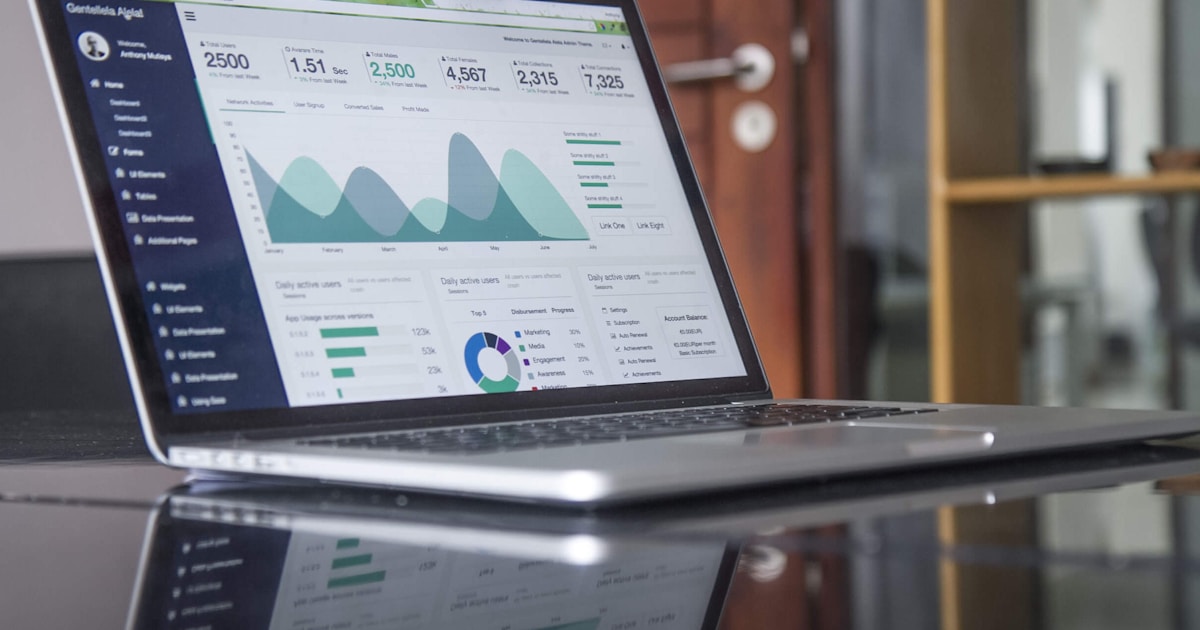
On February 24, 2026, Anthropic announced "Cowork & Plugins for the Enterprise." The pitch: Claude now lives inside Excel, PowerPoint, and Slack. No browser tab. No copy-paste. It sits right next to the ribbon, reads your cells, writes formulas, refactors macros, and jumps to PowerPoint to turn your analysis into slides.
The market responded immediately. FactSet stock rose 5.9%. Salesforce gained 4%, LegalZoom 2.6%, Microsoft 1.2%. These are the companies that benefit when AI burrows deeper into office tooling. On the other side of the trade, a different kind of reaction: raw fear that office jobs are over.
One week later, on March 5, Anthropic's own research team published "Labor Market Impacts of AI." The paper's headline finding: 90% of office and administrative tasks fall within the theoretical capability range of large language models. Whether the timing of the product launch and the research paper was deliberate is anyone's guess. What's certain is that millions of office workers asked the same question at once. "Is my job next?"
What Claude Actually Does Inside Excel
The capabilities Anthropic announced for Claude in Excel are specific. This is not "AI helps you" hand-waving.
First, multi-tab workbook analysis. Claude reads an entire Excel file -- even a financial model with dozens of tabs. It traces cell references, maps formula dependencies, and explains "why this cell has this value" with cell-level citations. Previously, tracking the source of a single cell meant hitting Ctrl+[ dozens of times. Claude does it in one sentence.
Second, formula generation and macro refactoring. Complex array formulas, nested XLOOKUPs, VBA automation -- describe what you need in plain English and it builds it. Anthropic's internal testing showed formula development time dropping by over 70%. It also reads legacy macros and rewrites them in modern structures.
Third, assumption changes with formula preservation. In financial models, changing an assumption often breaks downstream formulas. Claude understands the dependency tree before making changes, so it updates assumptions while preserving existing formula structures.
Fourth, pivot tables, charts, and conditional formatting. Added with the Opus 4.6 update, Claude can now create and edit pivot tables, modify charts, and apply conditional formatting rules. It covers nearly every editing function Excel offers.
Fifth, MCP connectors. S&P Global, LSEG, Daloopa, PitchBook, Moody's, FactSet -- all accessible without leaving Excel. An investment banking analyst can pull data from FactSet, model in Excel, and build a deck in PowerPoint in a single workflow.
PowerPoint, Slack, and the Plugin Ecosystem
Excel is just the entry point. Claude in PowerPoint reads slide masters, layouts, fonts, and color schemes. It understands your company's brand guidelines and generates or revises slides while maintaining visual consistency. Tell it "summarize Q4 results in 5 slides" and it fills in the content using your existing templates and formatting.
The key feature is context continuity between Excel and PowerPoint. Data analyzed in Excel flows into PowerPoint with full context preserved. No more copy-paste-reformat cycles. Analysis to presentation becomes a single pipeline.
Slack integration shipped too. Gmail, Google Drive, and DocuSign connectors come out of the box. On top of that, enterprises can build their own private plugin marketplaces. Anthropic's prebuilt plugin templates cover over 10 department-specific categories: HR, design, engineering, operations, brand voice, financial analysis, investment banking, equity research, private equity, and wealth management.
VentureBeat summarized it bluntly: "Claude Code transformed programming. Now Claude Cowork is coming for the rest of the enterprise."
Enterprise Pilots: Already in the Field
This is not vaporware. Pilots are already running in production environments.
L'Oreal has marketing and sales teams testing AI-driven slide automation. Deloitte is running integrated forecasting tools through its financial services division. Thomson Reuters is using Claude for document review and contract analysis in its legal units.
Anthropic disclosed the following performance numbers:
| Metric | Result |
|---|---|
| Financial modeling iteration speed | Up to 40% faster |
| Formula development time | Over 70% reduction |
| API cost optimization | 40% savings |
| Median prompt response time | Under 300 milliseconds |
The technical backbone is Opus 4.6's one-million-token context window. Context persists across sessions, meaning Claude remembers the spreadsheet you worked on yesterday when you open it today.
What these numbers mean in practice: a junior analyst's half-day financial model update now takes Claude minutes. Senior staff benefit too, but there is a critical difference. Seniors can verify Claude's output. Juniors often cannot. That gap matters more than the time savings.
90% of Office Tasks Are Theoretically Automatable
Anthropic researchers Maxim Massenkoff and Peter McCrory published "Labor Market Impacts of AI," a paper that compares theoretical AI capability with actual usage data from Claude. The core concept: "observed exposure" -- the gap between what AI can theoretically do and what Claude is actually doing in professional settings.
The results are simultaneously alarming and reassuring.
Computer and math occupations show 94% theoretical AI task coverage. Claude's actual task coverage: 33%. Office and administrative roles hit 90% theoretical capability. Actual usage: single digits.
The occupation with the highest observed exposure is computer programmers at 75%. Customer service representatives and data entry specialists follow. On the other end, cooks, motorcycle mechanics, bartenders, and lifeguards sit at 0% AI exposure. About 30% of all workers fall in this zero-exposure category.
The gap between theory and practice is the real story. 94% vs. 33%. That 61-point difference exists not just because the AI is not good enough. Legal constraints, technical limitations, the need for additional software tools, and the requirement for humans to review AI output all contribute. The question is how fast that gap closes.
Who Gets Hit First
The most uncomfortable finding in Anthropic's research is the demographic profile of workers most exposed to AI.
Workers in high-exposure occupations are 16 percentage points more likely to be female. They earn 47% more on average. They are nearly 4 times more likely to hold graduate degrees (17.4% vs. 4.5%). The pattern is clear: AI is not coming for repetitive manual labor first. It is coming for high-skill, high-income, white-collar intellectual work.
The early signals are already visible. Since ChatGPT launched, job-finding rates for 22-to-25-year-olds in AI-exposed occupations dropped 14%. The statistical significance is marginal, but the direction is unmistakable. Companies are not hiring for roles that AI tools can handle.
Fortune framed this as a potential "Great Recession for white-collar workers." If unemployment in high-exposure occupations doubles from 3% to 6%, the impact parallels the 2007-2009 financial crisis, when overall U.S. unemployment jumped from 5% to 10%. In February 2026, the U.S. economy shed 92,000 jobs and unemployment rose to 4.4%.
| Occupation | Theoretical AI Coverage | Actual AI Coverage | Gap |
|---|---|---|---|
| Computer/Math | 94% | 33% | 61pp |
| Office/Admin | 90% | Single digits | 80pp+ |
| Computer Programmers | High | 75% | Low |
| Data Entry | High | 67% | Low |
| Physical Labor | 0% | 0% | None |
How This Differs From Microsoft Copilot
"AI in Excel" is not new. Microsoft Copilot already does this. Anthropic's differentiation as a late entrant rests on three points.
First, the orchestration layer strategy. Copilot is a native feature within the Microsoft 365 ecosystem. Claude positions itself as a middleware layer that sits on top of existing enterprise systems. It is vendor-agnostic. It connects Google Workspace, Slack, and DocuSign simultaneously.
Second, open-source plugin architecture. Enterprises can build custom plugins and distribute them through internal marketplaces. HR, finance, and legal teams can customize department-specific agents. Copilot operates within the feature scope Microsoft defines.
Third, one-million-token context. Opus 4.6's context window dwarfs Copilot's. It can read and comprehend an entire complex financial model with dozens of tabs in a single pass.
| Category | Claude Cowork | Microsoft Copilot |
|---|---|---|
| Ecosystem | Multi-vendor (MS, Google, Slack) | Microsoft 365 only |
| Plugins | Open-source, enterprise-customizable | Microsoft-defined features |
| Context | 1M tokens (Opus 4.6) | Comparatively limited |
| External Data | MCP connectors (FactSet, S&P, etc.) | Microsoft Graph-centric |
| Approach | Orchestration layer | Native integration |
There are weaknesses too. A tenant data leakage vulnerability was discovered in January 2026, patched in February. From an enterprise security perspective, Copilot runs on Microsoft's security infrastructure. Claude is a third-party integration that requires additional security validation.
Office Work Is Not Ending. It Is Splitting.
The fear narrative is simple: "AI replaces office workers." Anthropic's own research tells a more complicated story.
The reason actual AI adoption sits in single digits for office roles with 90% theoretical coverage is not just technical limitations. Legal regulations, organizational inertia, and the time required to build trust all play a role. The world where auditors accept AI-generated spreadsheets at face value has not arrived.
But BLS projections show that occupations with higher AI exposure have 0.6 percentage points weaker employment growth forecasts. The pattern is not mass layoffs. It is hiring freezes. Existing employees keep their jobs, but vacant positions do not get filled. Claude fills the gap instead.
The 14% drop in job-finding rates for 22-to-25-year-olds is the first signal of this structural shift. If Claude in Excel can handle a significant portion of what junior analysts do, companies hire one senior with a Claude subscription instead of three juniors. Automation does not replace people. It replaces positions.
Claude moving into Excel is just the beginning. Excel, PowerPoint, Slack, Gmail, DocuSign -- AI is seeping into every tool office workers touch. The real threat is not AI itself. It is the new competency divide AI creates. The gap between those who can wield Claude as a tool and those who cannot. That gap will be the actual battlefield for office workers over the next five years.
Sources:
- Anthropic is doubling down on the tech that raised questions about AI coming for office jobs -- CNN
- Anthropic updates Claude Cowork tool built to give the average office worker a productivity boost -- CNBC
- How Anthropic's Claude Is Revolutionizing Excel and PowerPoint Workflows -- Applying AI
- Labor market impacts of AI: A new measure and early evidence -- Anthropic Research
- A 'Great Recession for white-collar workers' is absolutely possible -- Fortune
- Anthropic launches AI job destruction detector -- Axios
- Anthropic says Claude Code transformed programming. Now Claude Cowork is coming for the rest of the enterprise -- VentureBeat