- Authors

- Name
- 오늘의 바이브
Only 2 Out of 13 Let Go
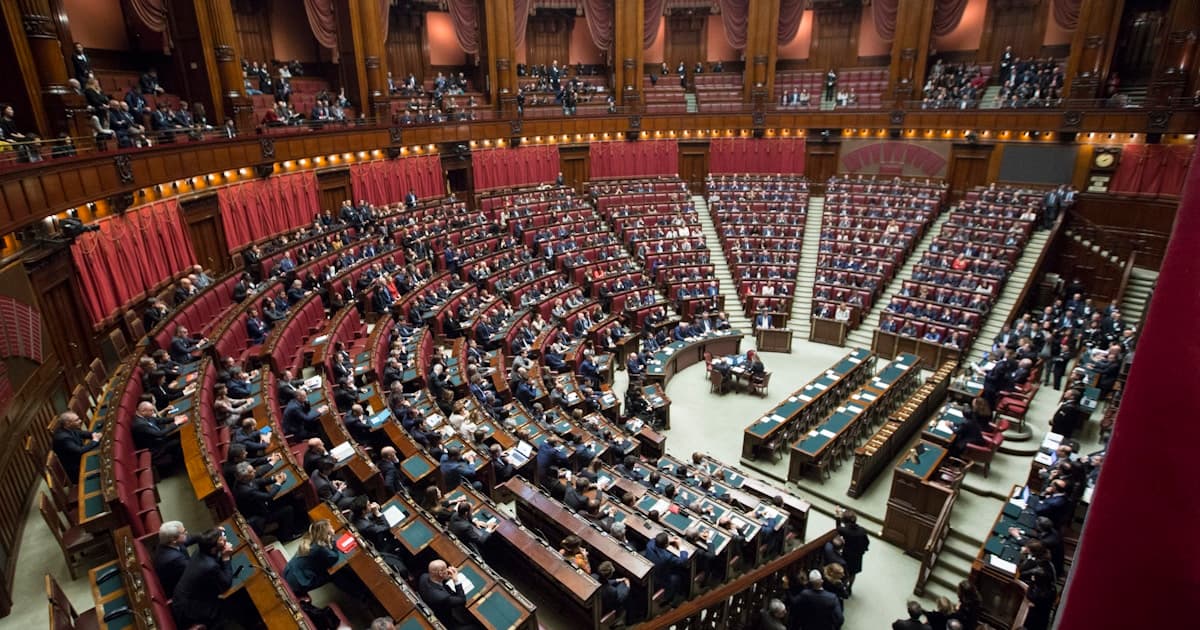
February 19, 2026, Bharat Mandapam, New Delhi. At the opening ceremony of India's AI Impact Summit, Prime Minister Narendra Modi requested 13 AI company CEOs on stage to join hands and raise them together as a symbol of unity. Google's Sundar Pichai, DeepMind's Demis Hassabis, and Reliance's Mukesh Ambani all complied. Modi personally grasped and lifted the hands of those closest to him, and that energy rippled out to both sides, forming a chain.
But two people's hands remained apart. OpenAI's Sam Altman and Anthropic's Dario Amodei. They stood side by side, but for several seconds refused to hold each other's hands. While all other attendees raised their hands high, these two men's hands hung in the air. Eventually, both ended up raising clenched fists. Not a handshake, not a high-five, but individual fists.
Within hours, this scene dominated social media. Headlines reading "The Defining Photo of the AI Cold War" appeared simultaneously on Bloomberg, Fortune, and CNBC. This few-second episode on the diplomatic stage starkly exposed the rift in the AI industry.
The Split From 5 Years Ago
To understand their relationship, we need to go back to 2021. Dario Amodei served as VP of Research at OpenAI. He led the GPT-2 and GPT-3 projects and co-invented RLHF (Reinforcement Learning from Human Feedback), a core technology for AI safety. He was one of the biggest contributors to OpenAI's technical success.
But Amodei grew increasingly dissatisfied with the organization's direction. As AI models grew larger, he believed safety research was falling behind. Critical decisions came from upper management, and safety reviews and deployment strategies felt perfunctory. During the GPT-3 deployment process, Amodei pushed for stricter safety reviews but was overruled by market launch timelines. He confided to those around him that he felt "psychologically abused" by Altman, while Altman told colleagues that conflicts with Amodei made him "hate the work."
One flashpoint dates back to GPT-3 development. Amodei successfully excluded OpenAI co-founder Greg Brockman from the GPT-3 team—a move to preserve research independence that planted seeds of fracture within the organization. Tensions between management and researchers surfaced.
In 2021, Amodei left with his sister Daniela Amodei and 12 other OpenAI alumni. That's how Anthropic was born, under the banner of "an AI company that puts safety first." The departure from OpenAI wasn't just a job change—it was an ideological split. They would build the same technology but with fundamentally different attitudes toward it.
Since then, the two companies rapidly became the AI industry's two pillars. OpenAI captured the consumer market with ChatGPT, Anthropic dominated enterprise with Claude. People who once shared an office building the same models became rivals worth hundreds of billions. And that rivalry condensed to the distance of one hand on the New Delhi stage.
The First Shot Was Fired at the Super Bowl
To understand the New Delhi incident, we need to rewind two weeks. February 9, 2026, the Super Bowl. Anthropic spent millions on four ads titled "Deception," "Betrayal," "Treachery," and "Violation." The common tagline: "Ads are coming to AI."
One ad showed a man consulting an AI therapist about communication issues with his mother. The AI offers some advice, then suddenly recommends a paid dating app. It was obviously targeting OpenAI, which had announced plans to introduce ads to ChatGPT. Anthropic declared "we will never put ads in Claude" and hammered home their differentiation from competitors on the biggest stage of all.
Altman's response was immediate. He attacked Anthropic's ads as "deceptive" and "plainly dishonest." He shot back that "Anthropic wants to control what people do with AI" and called them "a company selling expensive products to the rich." For a CEO to publicly criticize a competitor this directly was unusual even for Silicon Valley.
The result was Anthropic's victory. After the Super Bowl, Claude app downloads surged into the App Store top 10, Anthropic site visits increased 6.5%, and daily active users jumped 11%. Two of Anthropic's four ads achieved higher reach than OpenAI's three. In financial terms, Anthropic spent less and gained more. CNN called this ad war "an event opening a new era in the AI industry," and Fortune analyzed it as "an unprecedented situation where two companies publicly attack each other ahead of IPOs."
This ad war matters because it signals a shift in how the AI industry competes. Previously, competition happened through benchmark scores and tech blogs. Now it's Super Bowl ads mocking rivals and CEOs firing back directly on social media. Technical competition has expanded into brand warfare.
"I Didn't Know What Was Happening"
After the New Delhi incident, Altman attempted an explanation in an interview. "Honestly, I was confused. When PM Modi grabbed my hand and lifted it, I didn't really understand what we were supposed to do." That was Altman's official position.
Is it convincing? Eleven out of 13 people on stage immediately grasped the situation and joined hands. The Indian PM directly grabbed their hands to demonstrate, yet only two people "didn't know what was happening." That seems dubious. Moreover, Altman is a CEO who frequently navigates international political stages. In 2023, he toured 25 countries and had countless photo ops with world leaders. His relationship with Modi wasn't new either. Altman had previously visited India to discuss AI cooperation with Modi's government.
Anthropic was more concise. No comment. Amodei said nothing about the incident. In some ways, this silence spoke louder than Altman's lengthy explanation. Whether it was a decision that no explanation was needed or an acknowledgment that none was possible.
One thing is clear: both men knew the weight of that moment. Modi isn't just any leader to global tech companies. He's the gatekeeper to a 1.4 billion-person AI market. The leader of a country with the world's largest tech workforce. At a summit where Reliance and Adani committed a combined $210 billion in AI investment, the host of that market asked them to "hold hands" and they refused. This wasn't mere awkwardness—it was a choice.
On social media, the scene spread as a meme. The most shared caption: "The distance between these two = the distance between AI safety and profit." Yahoo Finance called this moment "the defining photo of the 2026 AI industry." A single photo conveyed more than thousands of pages of industry analysis reports.
Why India Really Held the AI Summit
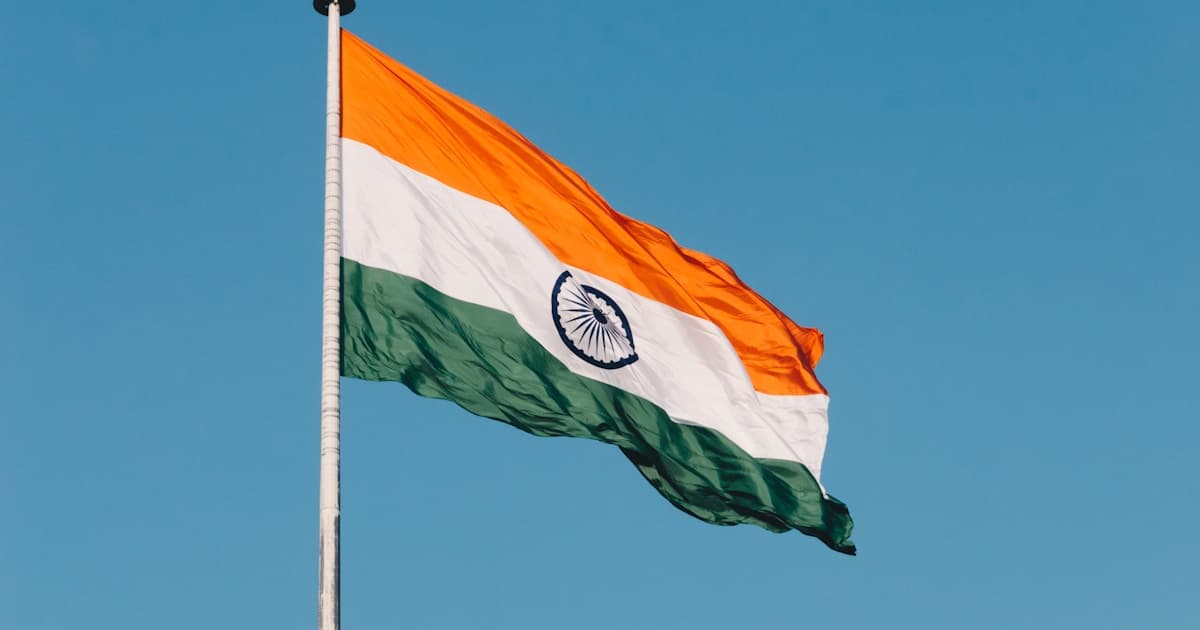
The India AI Impact Summit wasn't just a tech conference. It was the fourth global AI summit following Bletchley Park (2023), Seoul (2024), and Paris (2025). And it was the first AI summit hosted by a Global South nation. Over 500 AI leaders from more than 100 countries attended, with government heads from over 20 nations.
The Modi government's message was clear: "AI is not the exclusive domain of the West." IT Minister Ashwini Vaishnaw declared they would build a "frugal, sovereign, and scalable AI ecosystem." The government-led AI model BharatGen Param2 was unveiled at this summit. A 17-billion-parameter multimodal model supporting India's 22 official languages. Infrastructure investment plans to add 20,000 GPUs to the existing 38,000 were also announced.
| Item | Value |
|---|---|
| Summit dates | Feb 16-21, 2026 |
| Venue | Bharat Mandapam |
| Participating countries | 100+ |
| Government heads | 20+ |
| Reliance+Adani commitment | $210 billion |
| BharatGen Param2 parameters | 17 billion |
| Supported languages | 22 Indian languages |
| GPU addition plan | 20,000 |
In this context, the Altman-Amodei handshake refusal takes on different meaning. India wasn't just providing a stage—it was making a political declaration to give the Global South a voice in AI governance. UN Secretary-General António Guterres and French President Emmanuel Macron delivered opening speeches, underscoring the weight of the event. On such a stage, two US AI company CEOs failing to "unite" must have been disconcerting for India.
The summit's three keywords were People, Planet, and Progress. But the reality on stage was far from that idealism. At a moment symbolizing cooperation and unity among AI companies, the heads of the two most influential firms couldn't even hold hands. Modi's "hold hands" request ironically revealed the unbridgeable distance.
The Cold War Started in Philosophy, Not Technology
Altman and Amodei's conflict isn't merely about market share. It's fundamentally a philosophical difference about how AI should be built.
Altman's OpenAI pursues market dominance through rapid deployment. Introduce ads to ChatGPT, maximize company valuation, push for conversion from non-profit to for-profit. "Get AI benefits to as many people as fast as possible" is the surface logic. But critics point out this is "Silicon Valley's typical pattern of prioritizing growth over safety."
Amodei's Anthropic champions safety-first. They published their Responsible Scaling Policy (RSP) and tier deployment criteria based on AI model risk levels. But recently, Anthropic is changing too. In February 2026, reports emerged that Anthropic quietly modified its safety pledge language. Critics say they're loosening the safety reins to avoid falling behind in competition.
| Aspect | OpenAI | Anthropic |
|---|---|---|
| Founded | 2015 | 2021 (split from OpenAI) |
| CEO | Sam Altman | Dario Amodei |
| Flagship | ChatGPT, Codex | Claude, Claude Code |
| Revenue model | Subscription + ads planned | Subscription (no ads pledge) |
| Valuation | ~$300B | ~$260B |
| Safety approach | Deploy fast, fix later | Responsible Scaling Policy |
| Super Bowl ads | 3 (product promo) | 4 (competitor criticism) |
The irony is that both companies are becoming more similar. When OpenAI declares it will strengthen safety, Anthropic jumps into performance competition. When Anthropic targets enterprise markets, OpenAI rolls out enterprise plans. A split that began in philosophy is converging under market pressure. What remains isn't philosophy but emotion. And emotion manifested through fingertips on the New Delhi stage.
The Shadow of the 2023 Firing
There's another layer to this relationship. In November 2023, when Altman was abruptly fired by OpenAI's board, they approached Amodei to serve as replacement CEO. Amodei refused both offers. Altman ultimately returned after five days, but this episode likely left an indelible mark on their relationship.
Consider Altman's perspective. When he was ousted, the board approached his former colleague and current rival for that position. Though Amodei declined, the fact that the board nominated him must be an unpleasant memory for Altman.
From Amodei's view, it's similar. He left OpenAI because he couldn't trust its approach to safety, yet when the organization faced crisis, they asked him to return. Conviction that his decision to decline was correct coexisted with complex feelings about former colleagues.
Their relationship isn't simple business rivalry—it's a complex dynamic combining betrayal between ex-colleagues and ideological schism. The Super Bowl ad war was the public eruption of those emotions, and the New Delhi handshake refusal was their physical expression. Corporate competition is common. But two people who built the same models in the same lab unable to shake hands on the world's biggest stage is a different story entirely.
The timing is even more complex. On February 27, just after the New Delhi incident, the Trump administration issued an executive order stopping US federal agencies from using Anthropic technology. The Pentagon classified Anthropic as a "national security supply chain risk." While Amodei refused to hold hands with Altman in India, Washington was rejecting Amodei's company itself. The AI cold war front is expanding beyond inter-company competition into government-corporate conflicts.
An Industry That Can't Even Shake Hands Once
This incident matters because of what it symbolizes. AI is at an unprecedented technological turning point in human history. It's compared to the nuclear arms race and called the biggest paradigm shift since the internet. If the heads of two companies directing this technology can't manage a three-second handshake on the same stage, where does cooperation begin?
AI safety discussions require inter-company collaboration. Standards for assessing model risk, ethical guidelines for generative AI, joint responses to prevent misuse. All of this presupposes minimal trust between competitors. But the New Delhi scene showed that trust doesn't exist.
Of course, there have been fierce competitors in the past. Bill Gates and Steve Jobs, Larry Ellison and Marc Benioff. But their competition was over market share and product features. When Jobs returned to Apple in 1997, Gates invested $150 million and shook hands. Competition was competition, survival was survival. AI competition is different. It involves philosophical conflicts over safety standards, deployment policies, and governance structures. Because the technology's impact is incomparably greater than before.
During the summit, the draft AI declaration led by the Indian government included a clause on "global AI company collaboration framework." It embodied India's ambition to voice middle power concerns between the US and China. But before even signing the declaration, the symbol of collaboration showed a crack. The gap between the declaration's ideals and the reality on stage may be the summit's most accurate summary.
What PM Modi wanted was simple. One photo conveying "we're all in this together." In front of 500 AI leaders from 100 countries, a symbol that India is part of this technology's future. But what appeared in that photo wasn't unity but division.
The 250,000 AI responsibility pledges recorded in the 2024 Guinness World Records, the indigenous AI model supporting 22 languages, $210 billion in private investment. India staked enormously on this summit. At the pinnacle of all those efforts, what drew the most attention in the photo wasn't India's vision but the empty hands of two American CEOs. Modi's gesture to "hold hands" ironically revealed what the AI industry is worst at: working together.
Sources
- TechCrunch: Altman and Amodei share a moment of awkwardness at India's big AI summit
- CNBC: Sam Altman and Dario Amodei avoid holding hands at India AI summit
- Fortune: How Modi's AI handholding moment backfired
- Bloomberg: Altman-Amodei Hand-Holding Snub Goes Viral at India AI Event
- CNBC: Anthropic got an 11% user boost from its OpenAI-bashing Super Bowl ad
- Fortune: OpenAI-Anthropic Super Bowl ad clash
- Wikipedia: India AI Impact Summit 2026
- CNBC: Chaos, confusion and $200 billion dreams at India's AI summit